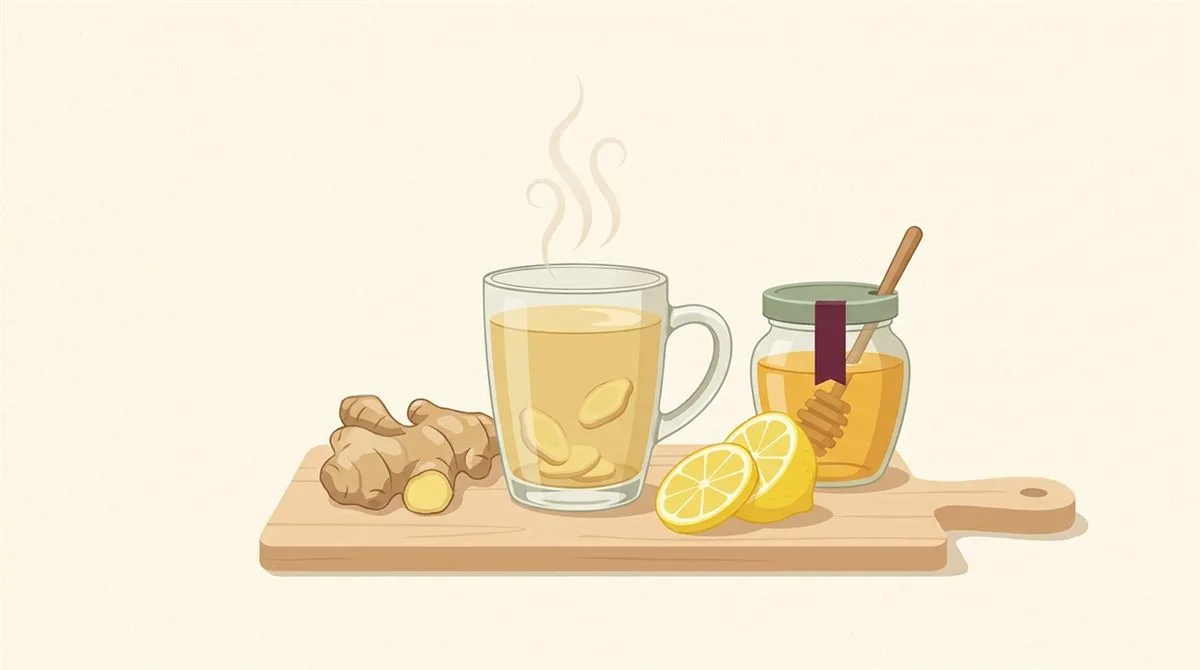
This ginger tea recipe takes about 20 minutes and needs nothing more than fresh ginger root, water and a saucepan. Lemon and honey are optional. The calculator below works out exactly how much ginger and water you need for any number of cups, at the strength you like, whether you use fresh or ground ginger.
After the calculator you will find the standard recipe for two cups, a strength table, simmering and steeping times, a version made with ground ginger, flavor ideas, storage tips and an honest look at what the research does and doesn’t support.
Ginger Tea Strength Calculator
Choose how many cups and how strong you like it. The ginger, water, steeping time and steps update as you go.
Your pot
Ingredients
Method
Steep timer
Ginger roots vary a lot, so weigh the ginger if you can. Taste after the minimum time and steep longer for more heat.
The calculator needs JavaScript. The 2-cup recipe below gives the standard amounts.
Easy Ginger Tea Recipe (2 Cups)
This ginger tea recipe is the calculator’s default setting: two 8 fl oz (240 ml) cups of medium-strength tea, made with sliced fresh ginger and simmered on the stove. It is warm and clearly gingery, with a gentle bite at the back of the throat, but not fiery.
Makes: about 2 cups (480 ml)
Time: about 20 minutes (5 minutes prep, 15 minutes simmering)
Equipment: small saucepan with a lid, knife or vegetable peeler, fine sieve, two mugs
Ingredients
- 20 g (0.7 oz) fresh ginger root
- About 550 ml (about 2 1/4 cups) water
- 1 tablespoon lemon juice, from about 1/3 of a lemon (optional)
- 2 teaspoons honey (optional)
The water amount is about 15% more than the two cups you will end up with. Some of it evaporates while the ginger simmers, so the extra makes sure you still finish with two full cups.
Method
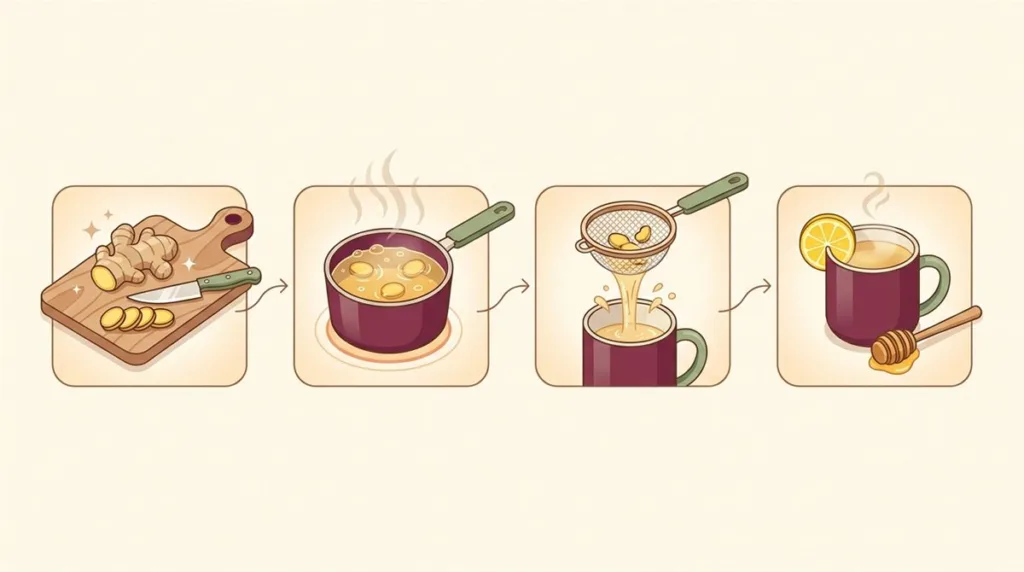
- Prepare the ginger. Scrub the root well under running water. Peeling is optional for young ginger with thin, shiny skin. Peel older roots with thick, papery skin.
- Slice it. Cut the ginger into thin coins, about 2 mm (1/16 inch) thick. Thinner slices give up their flavor faster.
- Bring to a boil. Put the ginger and water in the saucepan and bring it to a boil over high heat.
- Simmer. Turn the heat down so the water bubbles gently, cover the pan, and simmer for 15 minutes.
- Strain. Pour the tea through a fine sieve into two mugs. Discard the ginger, or save it for a second, weaker pot.
- Finish. Stir in the lemon juice and honey, if using. Taste, and add a splash of hot water if it is stronger than you like.
That is how to make ginger tea at its most basic. Once you have made it once or twice, you will be able to judge the strength by color and smell alone. A pale straw color means mild; a deeper gold means a stronger brew.
How Much Ginger for Ginger Tea
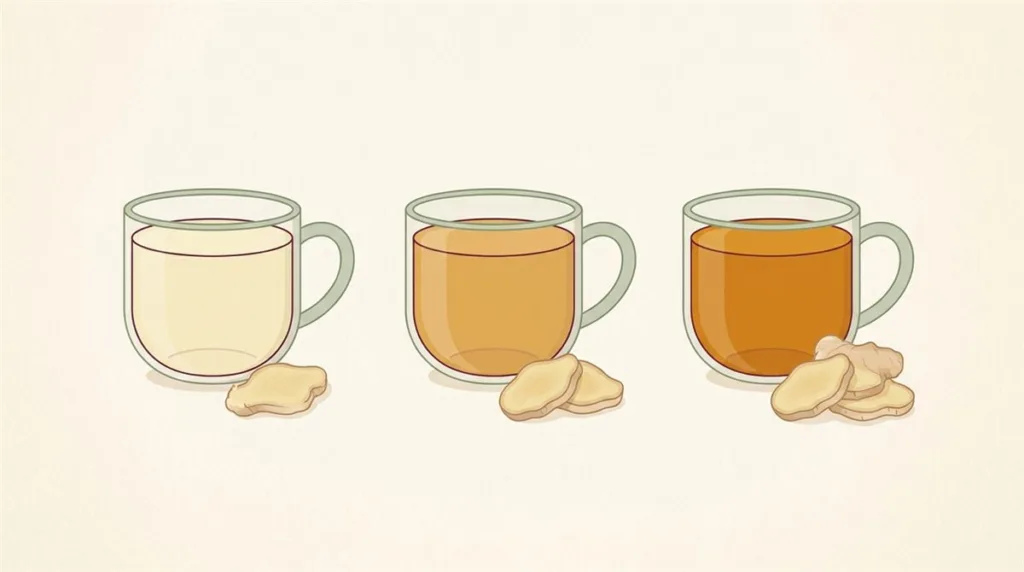
The most common question about any ginger tea recipe is how much ginger to use. The honest answer is that it depends on how strong you like it, and that is why the calculator has three settings. Here is how much ginger for ginger tea the calculator uses for each one.
| Strength | Fresh ginger per 8 fl oz (240 ml) cup | Per 12 fl oz (350 ml) cup | Roughly, in grated tablespoons (per 8 oz cup) | What it tastes like |
|---|---|---|---|---|
| Mild | 5 g | about 7 g | just under 1 tbsp | Light and warming, good for first-timers |
| Medium | 10 g | about 15 g | about 1 2/3 tbsp | Clearly gingery, with a gentle bite |
| Strong | 15 g | about 22 g | about 2 1/2 tbsp | Hot and peppery, for ginger fans |
In this ginger tea recipe, a larger 12 fl oz (350 ml) mug simply scales up in proportion, so it needs about one and a half times as much ginger as an 8 oz cup.
Weigh it if you can
One tablespoon of grated fresh ginger weighs about 6 g, but that is only an approximation. Grated ginger packs down to different degrees, and some roots are juicier or more fibrous than others.
Recipes that call for “a 1-inch piece” are even less reliable. Ginger roots vary so much in thickness that an inch can weigh a few grams or many times that. A cheap kitchen scale is the single most useful tool for getting the same cup of tea every time.
If you don’t have a scale, use the tablespoon guide in the table, and adjust next time. Too weak? Add a few more slices. Too fiery? Dilute it with hot water. Ginger is forgiving.
Fresh Ginger Tea: Sliced vs Grated
You can make fresh ginger tea from sliced or grated root, and either works in this ginger tea recipe. Both work, and the calculator handles both, but they behave differently in the pot.
Sliced ginger
- Cleaner, clearer tea. Slices are easy to strain out, and the tea stays bright and almost clear.
- Needs more time. Less surface area means the flavor comes out more slowly, so slices need a longer simmer or steep.
- Easy to reuse. You can lift the slices out with a spoon and simmer them again for a lighter second pot.
Grated ginger
- Faster and stronger. Grating breaks open more of the root, so the flavor is released in about half the time.
- Cloudier tea. Fine particles pass through a coarse strainer. Use a fine sieve, or let the tea settle for a minute before pouring.
- More prep. A microplane or the fine side of a box grater works best. Grate across the fibers, not along them.
For everyday fresh ginger tea, slices are the easier choice. If you are short on time, or you want a sharper, more peppery cup, grate it instead.
A food processor or blender can chop a large batch of ginger quickly. Treat finely chopped ginger like grated ginger when it comes to timing.
How Long to Boil Ginger for Tea
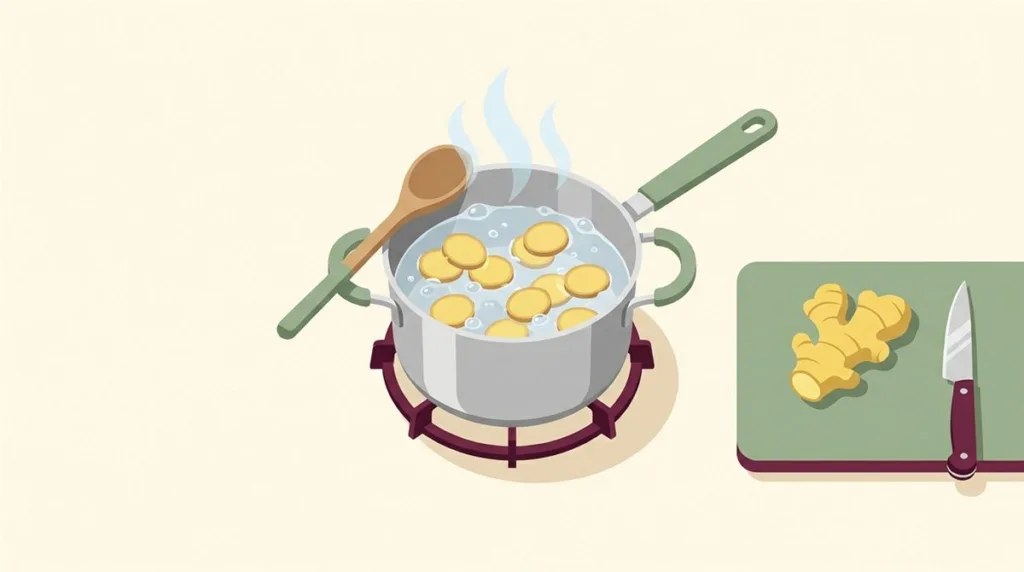
How long to boil ginger for tea depends on two things: how the ginger is cut, and whether you simmer it on the stove or steep it in water you have just boiled. Longer times give a stronger, hotter tea. Here are the times the calculator uses, in minutes.
| Ginger and method | Mild | Medium | Strong |
|---|---|---|---|
| Fresh sliced, simmered | 10 min | 15 min | 20 min |
| Fresh sliced, steeped (covered) | 15 min | 20 min | 25 min |
| Fresh grated, simmered | 5 min | 8 min | 10 min |
| Fresh grated, steeped (covered) | 8 min | 10 min | 12 min |
| Ground ginger, steeped (stir) | 3 min | 4 min | 5 min |
Simmering on the stove
Simmering gives the fullest flavor. Bring the ginger and water to a boil, then lower the heat so it bubbles gently, and cover the pan. A hard, rolling boil is not needed and drives off more water.
Even with a lid, some water evaporates. That is why the calculator adds about 15% extra water when you choose to simmer. For two 8 oz cups, that means about 550 ml of water to start rather than 480 ml.
Steeping in boiled water
Steeping is how to make ginger tea without a stove. It is the no-fuss method, and it is handy at work or when you only want one cup. Put the ginger in a mug or teapot, pour freshly boiled water over it, cover it with a saucer or lid, and wait.
Covering matters. It keeps the heat in, and the water stays hot enough to keep drawing out flavor. Because hardly any water is lost, steeping uses the cup volume as it is, with no extra water.
Steeped tea is a little gentler than simmered tea made with the same amount of ginger, which is why the steeping times in the table are longer.
Can you boil it too long?
Not in a way that does any harm, but the tea will get stronger and hotter the longer it goes, and the pan may boil dry. If you forget it on the stove, taste it and dilute with hot water. Once you know how long to boil ginger for tea to suit your taste, set a timer and you will get the same result every time.
Ginger Tea from Ground Ginger
No fresh root in the house? You can still make ginger tea from ground ginger, the dried powder in the spice rack. It is quicker, too, since there is nothing to slice or grate.
The calculator converts between the two using a common kitchen rule: 1 tablespoon of grated fresh ginger (about 6 g) is roughly equal to 1/4 teaspoon of ground ginger. That gives these amounts per 8 fl oz (240 ml) cup:
- Mild: about 1/4 teaspoon ground ginger
- Medium: about 1/2 teaspoon ground ginger
- Strong: about 2/3 teaspoon ground ginger
How to make it
- Put the ground ginger in a mug.
- Pour in a splash of hot water and stir it into a smooth paste, so it doesn’t clump.
- Top up with freshly boiled water and stir well.
- Leave it for 3 to 5 minutes, depending on strength, and stir again before drinking.
What to expect
Ginger tea from ground ginger is different from the fresh version, and it helps to know that before your first cup.
- It’s cloudy. The powder doesn’t dissolve. It stays suspended in the water and slowly settles to the bottom, so stir it now and then and leave the last sip in the mug.
- The flavor is warmer and less zesty. Dried ginger tastes earthier and rounder. Fresh ginger is brighter, juicier and more citrusy.
- Freshness matters. Ground ginger loses its aroma over time. An old jar at the back of the cupboard will make a flat, dusty cup.
Fresh and ground ginger are really different ingredients rather than straight substitutes. Swapping them by volume rarely works, which is why the calculator uses the conversion rule rather than the same number of spoons.
Flavor Variations
The basic ginger tea recipe is a good blank canvas, and every variation below starts from it. These are the add-ins the calculator offers, and a few more ideas.
Lemon
Lemon brightens the tea and balances the heat. The calculator suggests about 1/2 tablespoon of lemon juice per 8 oz cup. A medium lemon gives about 45 ml (3 tablespoons) of juice, so one lemon is enough for about six cups.
Add the lemon after the tea is strained, not while it simmers, to keep the flavor fresh. Lemon juice is acidic, so it is worth rinsing your mouth with water after drinking lemony tea regularly.
Honey
One teaspoon of honey per cup softens the bite. It is optional. A teaspoon of honey has about 5.7 g of sugar, so two cups a day with honey adds up to more than 11 g. Without honey, plain ginger tea has almost no sugar.
Stir honey into the tea once it has cooled slightly. Never give honey to babies under 1 year old.
Cinnamon
A cinnamon stick turns ginger tea into something closer to a spiced winter drink. The calculator uses one stick per four cups. Add it to the pan with the ginger and simmer them together.
If you drink a lot of cinnamon, note that the common cassia variety contains coumarin, which is a reason to keep very large daily amounts in check. A stick shared between four cups is a small amount.
Fresh mint
Mint adds a cool note that works well both hot and iced. Use about 4 leaves per cup. Add the leaves to the mug or the pot after you take it off the heat, and let them steep for a couple of minutes. Boiling mint can make it taste dull.
Turmeric and black pepper
A pinch of ground turmeric turns the tea golden, and a little black pepper is often added with it. The two are paired because piperine, a compound in black pepper, increases how much curcumin from turmeric the body absorbs. At the amounts in a cup of tea, though, the main effect is on flavor and color.
Iced ginger tea
Any ginger tea recipe works iced. Make the tea at medium or strong strength, let it cool, and chill it in the fridge. Serve over ice with lemon and a few mint leaves. Making it slightly stronger allows for the melting ice.
Common Mistakes
Most disappointing cups of ginger tea come down to one of these. None of them is hard to fix, and fixing them is most of what there is to learn about how to make ginger tea well.
- Measuring by the inch. A “2-inch piece” means very different amounts from one root to the next. Weigh the ginger, or use the tablespoon guide.
- Not using enough ginger. A couple of thin slices in a big mug makes hot water that smells faintly of ginger. Check how much ginger for ginger tea the table above suggests for your cup size.
- Too short a steep for slices. Sliced ginger needs at least 15 minutes when steeped. If your tea is weak, give it longer or switch to grated ginger.
- Leaving the pan uncovered. More water boils off, so you get less tea and a stronger, sometimes harsh, flavor.
- Boiling the honey and lemon. Add them at the end. Long heating dulls the lemon.
- Using old ground ginger. If the jar has no smell when you open it, it won’t have much flavor in the cup either.
- Skipping the scrub. If you leave the skin on, wash the root well. Soil hides in the knobbly joints.
Make-Ahead and Storage
This ginger tea recipe is easy to make in a batch. Make several cups at once, strain them, and keep the rest for later.
- Fridge: store brewed tea in a covered glass jar in the fridge for up to 3 days.
- To reheat: warm it gently on the stove or in the microwave. Don’t let it boil hard.
- To serve cold: pour it over ice straight from the fridge.
- Add extras fresh: stir in lemon, honey and mint when you serve each cup, not to the whole batch.
Always strain out the ginger before storing. Ginger left in the jar keeps steeping and the tea becomes stronger and more bitter each day.
Fresh ginger root itself keeps for a few weeks in the fridge, unwrapped or loosely wrapped in a paper towel. You can also freeze whole roots and grate them straight from frozen, which is a good way to keep some on hand for fresh ginger tea.
Ginger Tea or Ginger Shot?
Ginger tea and ginger shots are two very different ways to drink the same root.
- Ginger tea is a hot (or iced) infusion. A medium cup of fresh ginger tea uses about 10 g of ginger in 240 ml of water, so it is mild enough to sip slowly.
- A ginger shot is a small glass of strong, fresh ginger juice, usually with lemon. A standard 60 ml shot uses about 20 g of ginger, so it is a concentrated dose drunk in one go.
If you like the flavor of ginger but find shots too fiery, tea is the gentler option. If you want something quick and punchy, try our ginger shot recipe with a batch calculator, which works the same way as the calculator on this page.
What the Research Says
No clinical trials have tested a ginger tea recipe like this one, or homemade ginger tea in general. The research is on ginger itself, and it is most convincing for one thing.
Nausea: good evidence
A systematic review and meta-analysis of trials in pregnancy found that ginger reduced nausea and vomiting compared with placebo, with no evidence of harm at the doses studied. Ginger has also been studied for nausea after surgery and during chemotherapy, where results are more mixed but generally positive.
In practice, ginger tea is a reasonable first thing to try for travel sickness or morning sickness. If you are pregnant, talk to your midwife or doctor first. That is not because ginger is dangerous, but because persistent vomiting in pregnancy sometimes needs more than a spice.
Knee osteoarthritis: moderate evidence
A systematic review and meta-analysis of trials in knee osteoarthritis found that ginger modestly improved pain and function compared with placebo. The trials were small and the effects were not large. Ginger is not a replacement for treatment from your doctor, but it is a reasonable thing to try alongside it.
What isn’t supported
You will often see ginger tea promoted to “boost immunity”, “detox” the body or help with weight loss. These claims are not supported by human studies. A hot ginger drink can soothe a sore throat, but it does not shorten a cold.
What ginger tea offers is a warming, flavorful drink with almost no sugar if you skip the honey. For the full review of the evidence, read Ginger and Cayenne Pepper: What the Evidence Supports.
Before You Drink Ginger Tea Every Day
Ginger in food amounts is safe for most people, and a cup made with a standard ginger tea recipe is a food amount. A few cautions still apply, especially if you drink several strong cups a day.
- Heartburn and stomach upset. Too much ginger can cause heartburn or loose stools, and it can worsen reflux, gastritis or ulcers. Start with the Mild setting and work up.
- Blood thinners. Ginger can add to the effect of blood thinners such as warfarin. If you take one, check with your doctor before drinking ginger tea every day.
- Pregnancy. Ginger is one of the better-studied remedies for pregnancy nausea, but talk to your midwife or doctor first, especially before drinking it daily.
- Gallstones. Large amounts of ginger can worsen gallstone pain. If you have gallstones, check with your doctor first.
- Supplements are different. Ginger capsules deliver doses well above what is in a cup of tea. Treat them as a supplement and ask a pharmacist before taking them.
If something you eat or drink makes you feel unwell, stop and get medical help.
This post is general information, not medical advice.
Frequently Asked Questions
How do you make fresh ginger tea?
Here is how to make ginger tea in its simplest form: slice about 10 g of fresh ginger per cup, simmer it in water for 15 minutes with the lid on, then strain. Add lemon and honey if you like. Use the calculator above to scale it to any number of cups.
How much ginger for ginger tea should I use per cup?
For an 8 fl oz (240 ml) cup, use 5 g of fresh ginger for mild tea, 10 g for medium or 15 g for strong. With ground ginger, use about 1/4, 1/2 or 2/3 teaspoon.
How long should I boil ginger for tea?
Simmer sliced ginger for 10 to 20 minutes, or grated ginger for 5 to 10 minutes, depending on how strong you want it. If you steep instead of simmering, allow a few minutes longer and keep the cup covered.
Can I make ginger tea from ground ginger?
Yes. Stir about 1/2 teaspoon of ground ginger into an 8 oz cup of freshly boiled water and leave it for about 4 minutes. It will be cloudier and earthier than tea made with fresh ginger, and you will need to stir it as it settles.
Do I need to peel ginger for tea?
No. Young ginger with thin skin can go in unpeeled as long as you scrub it well. Peel older roots with thick, papery skin, which can taste bitter. The edge of a teaspoon scrapes it off easily.
How long does homemade ginger tea last?
Strain it and keep it in a covered jar in the fridge for up to 3 days. Reheat it gently or serve it over ice.
Is it OK to drink ginger tea every day?
For most healthy adults, a cup or two a day is a food amount of ginger. Cut back if you get heartburn or an upset stomach. Check with a doctor first if you take blood thinners, are pregnant, or have reflux, ulcers or gallstones.
Is ginger tea good for a cold?
A hot cup made with this ginger tea recipe can soothe a sore throat, and many people find it comforting when they are unwell. It does not cure a cold or shorten it, and claims that it “boosts immunity” are not supported by the research.
A Ginger Tea Recipe You Can Make Your Own
The best ginger tea recipe is the one adjusted to your taste, and the calculator is there to help you find it. Start with the default: 10 g of fresh ginger per cup, simmered for 15 minutes. Then use the calculator to make it milder or stronger, switch to grated or ground ginger, or scale it up for a jar in the fridge.
Now that you know how to make ginger tea, how much ginger to use and how long to brew it, you can make a consistent cup every time. Weigh the ginger, set a timer, and taste before you add anything else. Bookmark this ginger tea recipe and the calculator for next time.
Sources and Further Reading
- NCCIH: Ginger — National Institutes of Health
- A systematic review and meta-analysis of the effect and safety of ginger in the treatment of pregnancy-associated nausea and vomiting — Nutr J. 2014;13:20
- Effectiveness of Ginger on Pain and Function in Knee Osteoarthritis: A PRISMA Systematic Review and Meta-Analysis — Pain Physician. 2020;23(2):E151-E161
- USDA FoodData Central — sugar value for honey used in the calculator