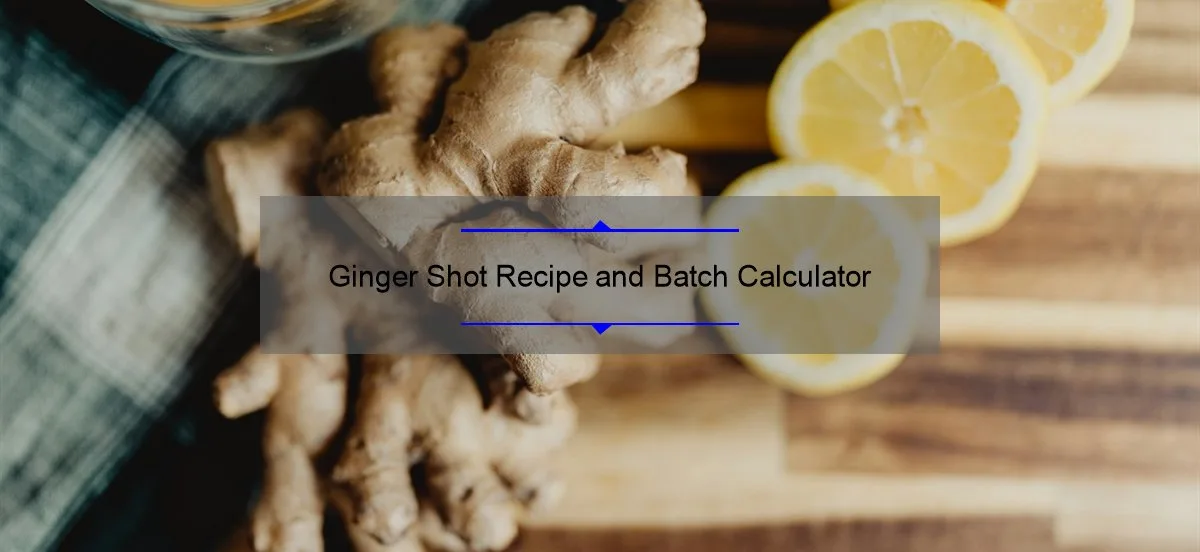
A ginger shot is a small glass of strong, fresh ginger juice, usually sharpened with lemon. This ginger shot recipe comes with a calculator that works out how much ginger, lemon and juice you need for any number of shots. After it there’s the standard recipe for a week’s worth (7 shots), how to store them, and what the research does and doesn’t support.
Ginger Shot Batch Calculator
Choose how many shots you want. The ingredients, shopping list and steps update as you go.
What’s in one shot
Your batch
Ingredients
Amounts include about 10% extra to cover the juice that stays in the pulp.
Method
Storage
The calculator needs JavaScript. The 7-shot recipe below gives the standard amounts.
Standard Ginger Shot Recipe (7 Shots)
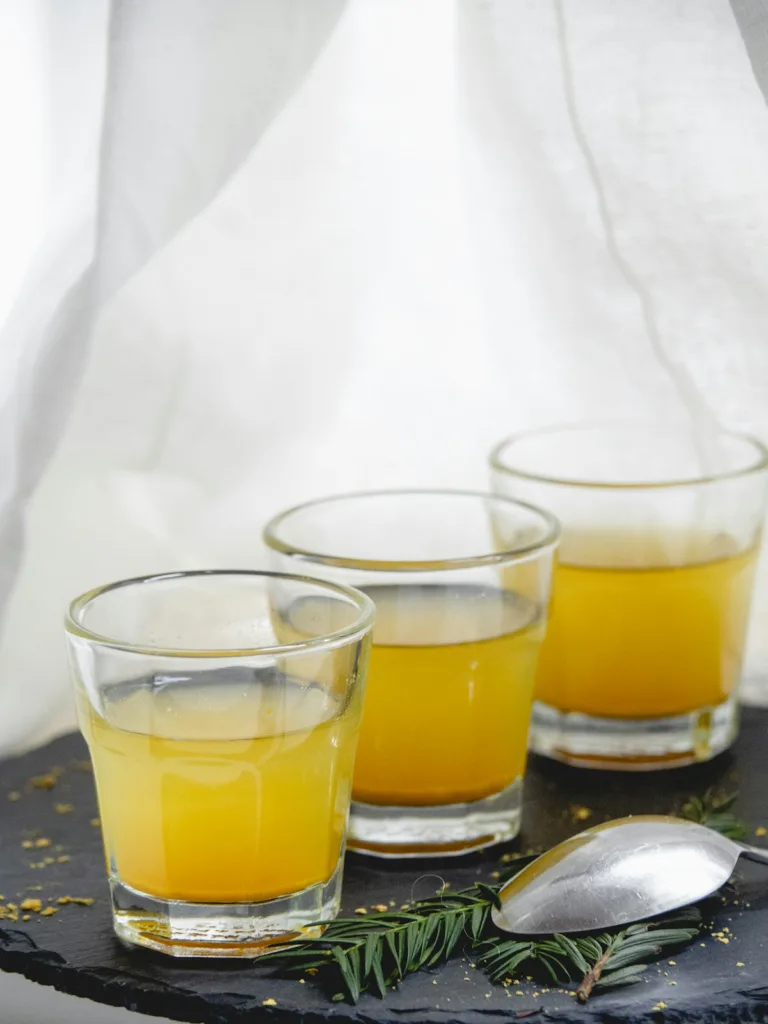
This is the calculator’s default ginger shot recipe: seven 2 fl oz (60 ml) shots at standard strength, enough for one a day for a week.
Makes: about 420 ml (1¾ cups), 7 shots
Time: 15 minutes
Equipment: blender, fine sieve or nut-milk bag, 7 small bottles or jars
Ingredients
- 154 g (5.4 oz) fresh ginger root
- 116 ml (½ cup) lemon juice, from about 3 lemons
- 270 ml (1¼ cups) orange juice, from about 4 oranges, or store-bought 100% juice
- 1 tsp ground turmeric (optional)
- ¼ tsp ground black pepper (optional)
These amounts include about 10% extra to cover the juice that stays in the pulp.
Method
- Prepare the ginger. Scrub it well. Peeling is optional for young roots with thin skin. Chop into 1 cm (½ in) pieces.
- Juice the citrus. Juice the lemons, and the oranges if you’re using fresh. Keep the lemon juice separate.
- Blend. Blend the ginger with the orange juice, turmeric and pepper on high for 60 seconds.
- Strain. Pour through a fine sieve or nut-milk bag and press the pulp hard.
- Finish. Stir in the lemon juice and taste. If it’s too fiery, add a splash of water.
- Bottle. Divide between 7 small bottles, seal, and refrigerate.
Each of these ginger shots has about 20 g of fresh ginger and about 3.3 g of sugar, almost all of it from the orange juice.
Choosing a Ginger Shot Strength
| Strength | Fresh ginger per 60 ml shot | Who it suits |
|---|---|---|
| Mild | 12 g | First-timers, or anyone prone to heartburn |
| Standard | 20 g | Most people: hot, but drinkable in one go |
| Strong | 30 g | Seasoned ginger fans. Expect a real burn. |
Weigh the ginger rather than measuring it by the inch. Roots vary so much in thickness that “a 2-inch piece” can mean anything from 10 to 40 grams.
Swaps and Add-Ins
- Base liquid. Orange juice softens the heat and adds sweetness. Apple juice is sweeter still. Coconut water and plain water keep the sugar down: with water, a standard shot has well under 1 g of sugar.
- Turmeric and black pepper. These are a common pairing because piperine, a compound in black pepper, increases how much curcumin from turmeric the body absorbs. At the amounts in a shot, the main effect is on flavor and color.
- Honey. It takes the edge off, at about 5.7 g of sugar per teaspoon. Never give honey to babies under 1 year old.
- Cayenne. A small pinch adds a second kind of heat. For more on what cayenne does and doesn’t do, see our post on ginger and cayenne pepper.
Blender or Juicer?
A blender is what most people have, and it’s what this ginger shot recipe assumes: blend the ginger with liquid, then strain. A juicer extracts more juice from the same ginger and skips the straining, so you can use about a quarter less ginger. Run the ginger through on its own, then mix it with the lemon and base liquid.
How Long Ginger Shots Keep
- Fridge: best within 5 days, in sealed glass. The juice separates, so shake before drinking.
- Freezer: pour into an ice-cube tray, freeze, then bag the cubes. They keep for up to 3 months. Thaw one overnight in the fridge.
If you make more than 5 ginger shots, the calculator tells you how many to freeze.
Ginger Shot Variations
Once you have the base ginger shot recipe down, the easiest way to change it is to swap the liquid. Keep the ginger (20 g) and lemon (15 ml) the same for each 60 ml shot and replace the 35 ml of orange juice with one of these. The calculator’s amounts still apply; just buy the different juice.
- Pineapple ginger. Pineapple juice is sweet and tart, and it hides the burn well. A good first shot for anyone who finds ginger too harsh.
- Carrot ginger. Carrot juice gives an earthy, slightly sweet shot with a deep orange color. It pairs well with turmeric.
- Green apple and mint. Use unsweetened apple juice and blend in 2 or 3 mint leaves per shot. Bright and fresh rather than fiery.
- Coconut and lime. Use coconut water as the base and lime juice instead of lemon. The lowest-sugar option apart from plain water.
- Extra heat. Add a small pinch of cayenne to any version. Taste a sip before adding more, because cayenne builds as you drink.
Common Mistakes
- Measuring ginger by the inch. A “2-inch piece” can weigh anything from 10 to 40 grams, which is the difference between a mild shot and one that makes you cough. Weigh it.
- Skipping the straining. Unstrained, a blended ginger shot is gritty and the fibers catch in your throat. A fine sieve works; a nut-milk bag gets more juice out.
- Starting on Strong. Work up from Mild. If the first shot gives you heartburn, you are less likely to keep going.
- Making a month’s worth at once. Fresh shots taste best within 5 days. Freeze anything beyond that rather than keeping it in the fridge.
- Storing it in plastic. Ginger and lemon are strongly flavored and acidic, and plastic bottles can hold on to the smell. Small glass bottles or jars are better.
A Simple Weekly Prep Plan
Most people make ginger shots once a week. The calculator’s default of 7 shots is built around that routine:
- Shop: about 154 g of ginger, 3 lemons and 4 oranges (or a small carton of 100% orange juice).
- Make: 15 minutes of chopping, blending and straining.
- Store: 5 shots in the fridge for the next five days and 2 in the freezer as ice cubes for days six and seven.
- Thaw: move a frozen cube to the fridge the night before you want it.
If you would rather make a bigger batch less often, set the calculator to 14 or 21 shots. It works out how many to freeze and tells you when to blend in rounds so the blender isn’t overfilled.
What You’ll Need
You don’t need a juicer or any special equipment to follow this ginger shot recipe. Most kitchens already have everything:
- A blender. Any countertop blender works. A small personal blender is fine for up to about 7 shots; for bigger batches, blend in rounds.
- A kitchen scale. The single most useful tool here, because ginger roots vary so much in thickness. Weighing is the only way to get the same strength every week.
- A fine sieve or nut-milk bag. A sieve is quicker to clean. A nut-milk bag lets you squeeze the pulp and gets noticeably more juice out.
- A small funnel and glass bottles. Bottles of 60 ml (2 fl oz) hold exactly one shot. Small jam jars work too.
- An ice-cube tray. A standard cube holds about 30 ml, so one 60 ml ginger shot is two cubes. Silicone trays make the cubes easier to pop out.
Choosing and Storing Fresh Ginger
Good ginger shots start with good ginger. When you buy it, look for roots that are firm and heavy for their size, with smooth, tight skin. Avoid pieces that are wrinkled, soft, or show mold where the knobs have been snapped off. Wrinkled ginger is old ginger: drier, more fibrous and harder to blend.
Young ginger, sometimes sold in spring with thin, almost translucent skin and pink tips, is milder and juicier. You don’t need to peel it at all. Mature ginger has a tougher, papery skin and a stronger bite.
To store fresh ginger, keep it unpeeled in a sealed bag in the vegetable drawer of your fridge, where it stays in good condition for a few weeks. For longer storage, freeze the whole root. Frozen ginger is easy to weigh and chop, so you can make your ginger shot recipe straight from the freezer without thawing it first.
What to Do With the Leftover Pulp
Straining leaves you with a handful of ginger pulp. It has lost most of its juice, but it still has flavor, so there is no need to throw it away:
- Cooking. Stir a spoonful into stir-fries, curries, soups or marinades.
- Tea. Steep a spoonful in hot water for 5 minutes, then strain, for a mild ginger tea.
- Freezing. Press the pulp into an ice-cube tray and freeze it in portions for later cooking.
Keep the pulp in a covered container in the fridge and use it within 2 or 3 days, or freeze it. If your batch included turmeric, use a glass or metal container, because turmeric stains plastic and wooden spoons a stubborn yellow.
Ginger Shot or Ginger Tea?
Both use the same ingredient. The difference is concentration and temperature. A ginger shot is a small, cold, undiluted dose that you drink in one go, which is why it burns. Ginger tea uses less ginger in much more water and is sipped hot, so it’s far gentler on the throat and stomach.
If shots give you heartburn even on the Mild setting, ginger tea is the easier way to include ginger in your day. If you like the ritual of a quick morning drink, the shot is faster: once your weekly batch is made, there is nothing to prepare.
What the Research Says About Ginger Shots
No clinical trials have tested ginger shots themselves. The research is on ginger in general, and it’s most convincing for one thing: nausea. A systematic review of trials in pregnancy found ginger reduced nausea and vomiting compared with placebo. For knee osteoarthritis pain the evidence is more modest.
Claims that ginger shots “boost immunity”, “detox” the body or melt fat are not supported by human studies. A ginger shot is a lively, low-calorie drink with a strong ingredient. For the full review of the evidence, read Ginger and Cayenne Pepper: What the Evidence Supports.
Before You Try This
Ginger in food amounts is safe for most people, but a shot is a concentrated dose, so a few cautions apply:
- Heartburn and stomach upset. Strong shots can cause heartburn or loose stools, and they can worsen reflux, gastritis or ulcers. Start on Mild.
- Blood thinners. Ginger can add to the effect of blood thinners such as warfarin. If you take one, check with your doctor before drinking ginger shots every day.
- Pregnancy. Ginger is one of the better-studied remedies for pregnancy nausea, but talk to your midwife or doctor first, especially before taking it daily.
- Your teeth. Lemon juice is acidic. Drink the shot in one go and rinse with water afterward.
This post is general information, not medical advice.
Frequently Asked Questions
How much ginger is in one ginger shot?
In this recipe, a standard 60 ml (2 fl oz) shot uses about 20 g of fresh ginger. Mild uses 12 g and strong uses 30 g. The calculator adjusts this for 30 ml shots.
Do I need to peel the ginger?
No. Scrub it well and leave the skin on if it’s thin, as it is on young ginger. Peel older roots with thick, papery skin, which can taste bitter. A teaspoon edge scrapes it off easily.
Can I make ginger shots without a juicer?
Yes. To make ginger shots without a juicer, blend the chopped ginger with your base liquid, then strain it through a fine sieve or nut-milk bag. That’s the method the calculator uses.
How long do homemade ginger shots last?
They’re best within 5 days in the fridge, in a sealed glass bottle. Frozen in an ice-cube tray, they keep for up to 3 months.
Is it OK to drink a ginger shot every day?
For most healthy adults, one shot a day uses ginger in food amounts. Cut back if you get heartburn or an upset stomach. Check with a doctor first if you take blood thinners, are pregnant, or have reflux, ulcers or gallstones.
When is the best time to drink a ginger shot?
There’s no evidence that timing matters for health. Many people find a shot easier on the stomach with or after food rather than on an empty stomach.
Can I use ground ginger instead of fresh?
In a pinch. A common kitchen rule is that 1 tablespoon of grated fresh ginger equals about ¼ teaspoon of ground ginger, which works out to roughly ¾ teaspoon ground ginger per standard shot. Start with half that. Ground ginger tastes warmer and less zesty, and it settles to the bottom, so stir it well and skip the straining. For the classic ginger shot recipe, fresh is better.
Why does my ginger shot taste bitter?
Usually it’s the skin of older ginger, too much turmeric, or lemon pith if you blended whole lemon pieces instead of juicing them. Peel thick-skinned roots, keep turmeric to about ⅛ teaspoon per shot, and juice the citrus separately.
Can I make ginger shots without lemon?
Yes. Lime works the same way. Without any citrus the shot tastes flatter and spicier, so add a little more of the base juice to balance it.
How can I make ginger shots less spicy?
Start with the Mild setting in the calculator, which uses 12 g of ginger per 60 ml shot instead of 20 g. You can also switch to a sweeter base such as pineapple or apple juice, add a teaspoon of honey, or top the shot up with a splash of cold water. Drinking it with breakfast rather than on an empty stomach also takes the edge off the burn for many people.
Can I use store-bought juice in a ginger shot?
Yes. Bottled 100% orange, apple or pineapple juice works well and saves time. Check the label and avoid “juice drinks” or “cocktails”, which usually contain added sugar. Fresh-squeezed lemon juice gives a brighter flavor than bottled, but bottled lemon juice is fine if that’s what you have.
Sources and Further Reading
- NCCIH: Ginger — National Institutes of Health
- A systematic review and meta-analysis of the effect and safety of ginger in the treatment of pregnancy-associated nausea and vomiting
- USDA FoodData Central — sugar values for orange juice, apple juice, coconut water, lemon juice and honey used in the calculator