
Aquamin is a branded mineral ingredient made from red algae — Lithothamnion, a calcified seaweed harvested off the Atlantic coast. It turns up in calcium supplements, in fortified foods and drinks, and increasingly in joint and bone formulas, usually described as a “natural marine multi-mineral” rather than as the calcium supplement it largely is.
It has a real research base. It is also smaller than the marketing suggests, concentrated in a few areas, and heavily weighted toward animal studies that get quoted as though they were about people. This article goes through what has actually been tested in humans, what has only been tested in rats and mice, and what has not been tested at all.
Short version: the best human evidence is for the gut lining, there are two promising small trials for knee osteoarthritis, and the bone claims — the ones Aquamin is sold on hardest — rest on thinner ground than you would expect.
Key Takeaways
- Aquamin is a calcium and magnesium source derived from red algae, with trace minerals alongside. Most of what it does for you, it does as a calcium supplement.
- Best human evidence: the gut lining. A 90-day, three-arm trial in 30 people found Aquamin changed colon-tissue markers more than plain calcium or placebo — a real head-to-head result, on biomarkers rather than on health outcomes.
- Joints: two small positive pilot trials in knee osteoarthritis. Promising, unconfirmed.
- Bone: weaker than advertised. The human study measured markers of calcium metabolism, not bone density. The bone-structure results are in rats.
- Brain, heart, liver, immunity and skin: no human trials. Those claims come from animal work.
- Much of the research involves the manufacturer, which is normal for a branded ingredient and is still worth knowing.
What Aquamin Is
Aquamin is produced from the mineralised skeletal remains of Lithothamnion species, a red calcareous algae that absorbs calcium, magnesium and trace minerals from seawater as it grows. The harvested material is cleaned, dried and milled.
The result is approximately 30% calcium by weight, carries calcium and magnesium at roughly a 14:1 molar ratio, and has detectable levels of 72 additional trace minerals — essentially everything the algae accumulated from seawater. Those figures come from the published trial literature rather than from marketing copy.
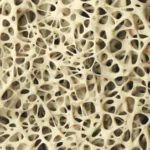
Structurally it is porous — a honeycomb rather than a solid crystal — which is the basis of the claim that it dissolves and absorbs more readily than the calcium carbonate in a standard tablet, and that it is gentler on the stomach.
That porosity claim is plausible, and the trace-mineral content is the ingredient’s main point of differentiation. As it happens, one human study did compare Aquamin directly against plain calcium and found a difference — see the gut section below. What has not been tested head to head is whether any of that translates into better bones.
One small correction to the way it is usually described: algae are not plants, so “plant-based” is not quite right. “Algae-derived” or “marine-derived” is accurate.
Doses Used in Research
Published trials have used daily Aquamin doses across a wide range, roughly 800 mg to 2,400 mg of the mineral complex. At least one trial was designed to deliver 800 mg of elemental calcium per day.
Those are the amounts the research used, not a recommendation. What matters more for most people is the total: Aquamin’s calcium counts toward your daily intake alongside the calcium in your food, in any other supplement you take, and in antacids. Adults generally need 1,000 to 1,200 mg a day depending on age and sex, with an upper limit above which the risks start to outweigh the benefits.
If you are considering it, work out what you are already getting before you decide what to add, and check it with a doctor or pharmacist — particularly if you have kidney disease or a history of kidney stones.
Gut Health: the Best Human Evidence

This is where Aquamin has its strongest human result, and it is more interesting than the animal findings usually quoted in its place.
Thirty people, all at elevated risk of colorectal cancer, took part in a 90-day trial with three arms: Aquamin, calcium carbonate alone, or a placebo. Researchers took biopsies of the colon lining before and after and compared what the tissue was doing.
The design is the part worth noticing. Comparing Aquamin against plain calcium rather than only against a placebo is the right way to ask the question that actually matters for a product like this — does the algae-derived complex do anything that ordinary calcium doesn’t? Most supplement research never asks it.
The answer, on these measurements, was yes. Aquamin reduced a marker of cell proliferation more than either placebo or calcium alone, and nudged up a marker of cell differentiation. Across a broader protein screen, Aquamin shifted considerably more proteins than placebo — upward for pro-apoptotic proteins, cytokeratins, cell-to-cell adhesion molecules and basement-membrane components; downward for proteins involved in proliferation. Calcium alone moved many of the same proteins, the authors noted, but not to the same extent. Their conclusion was that daily Aquamin “alters protein expression profile in the colon that could be beneficial to colonic health.”
Now the limits, which matter just as much. Thirty people is small. These are tissue biomarkers, not health outcomes: nobody has shown that these protein changes translate into fewer digestive symptoms, less inflammatory bowel disease, fewer polyps, or any difference a person would notice. And although the participants were selected for elevated colorectal cancer risk and the study sits in a cancer-chemoprevention research tradition, no cancer outcome was measured — so this is not evidence that Aquamin prevents cancer, and nobody involved claimed it was.
What it is: a well-designed small human study showing Aquamin does something measurable in the colon that plain calcium does less of. That is a real result, and it is the best one this ingredient has.
The colitis and gut-microbiome findings you will see cited alongside it — reduced severity of colitis, improved barrier function, a better microbiome — are from rats and mice.
Joints: Two Small Positive Trials

Two randomised pilot trials have tested Aquamin in people with knee osteoarthritis, and both reported improvements in pain and stiffness compared with placebo.
“Pilot” is the word to keep hold of. These were short studies in small groups, explicitly designed to find out whether a larger trial was worth running rather than to settle the question. Both were published around 2008 and 2009, and the full trial that would confirm them has not appeared since.
So this is a genuine positive early signal, now more than fifteen years old and unreplicated at scale. In the wider context — a meta-analysis of nutritional supplements for osteoarthritis symptoms found many compounds with findings at about this level of strength and very few that survive bigger trials — it is reasonable to describe Aquamin as one of the more plausible options in a field full of unconfirmed ones. That is a more useful statement than either “proven” or “useless”.
Bone: Thinner Than Advertised
Aquamin is marketed hardest for bone health, and the logic is sound as far as it goes. It is a calcium and magnesium source, and both minerals are needed to build and maintain bone. If you are not getting enough calcium, a calcium supplement helps your bones. That much is not in question.
What is less well supported is the specific claim that Aquamin does more for bone than ordinary calcium would.
The human study here measured markers of calcium metabolism in premenopausal women — blood and urine indicators of how the body is handling calcium — rather than bone density itself. That is a legitimate study design and a reasonable early step. It is not a measurement of bone.
The studies showing preserved bone structure, composition and strength were done in ovariectomised rats, an established animal model of post-menopausal osteoporosis. Again, legitimate science, and again not a result in women.
You will also see claims that Aquamin “improved bone mineral density in menopausal women over 24 weeks” and “in healthy young men over 12 weeks”. Those specific studies are difficult to locate in the indexed literature, and the human work that is published measured something different. Until a trial measures bone density in people taking Aquamin and finds a difference, the honest position is: it supplies calcium, calcium matters for bone, and the rest is not yet shown.
Brain, Heart, Liver, Immunity and Skin: Animal Studies Only
Aquamin is credited with benefits across a striking number of organ systems. For these five, the evidence is preclinical — meaning in animals or in cells, which tells researchers where to look next and does not support a claim about your body.
- Brain — the cognitive and oxidative-stress findings are in rodents. No trial has tested Aquamin and cognition in people.
- Heart — the blood pressure, endothelial function and cholesterol findings are in rats and mice.
- Liver — the fatty-liver and liver-tumour findings are in mice. This is the one where the gap matters most, because “reduces the risk of liver cancer” is a claim people act on, and a mouse tumour-formation experiment cannot support it.
- Immunity — the immune findings are in mice. Minerals matter for immunity in the sense that deficiencies impair it; supplementing beyond sufficiency has not been shown to boost anything.
- Skin and athletic performance — claims circulate; no human trials are indexed.
None of this means the animal work is worthless. Preclinical research is how real findings start. It means that if you are buying Aquamin for your brain, your heart, your liver, your immune system or your skin, you are buying ahead of the evidence.
A Note on Who Funded the Research
Aquamin is a commercial branded ingredient, and much of the published work on it involves the manufacturer as a funder, a supplier of material, or a co-author. That is entirely normal — almost nobody else has a reason to study a specific branded ingredient — and it is not evidence of anything improper.
It does mean two things worth keeping in mind. Independent replication is scarce, and the research agenda has been shaped by commercial interest, which is part of why there are several promising preliminary findings and no large confirmatory trial. That pattern is common for supplement ingredients and is the main reason to read claims about them carefully.
How It Compares to Other Calcium Supplements
Most calcium supplements use calcium carbonate from limestone, or calcium citrate. Both are cheap, well-studied and effective at raising calcium intake.
Aquamin’s differences: it comes from algae rather than rock, it brings magnesium and 72 trace minerals along with the calcium, and its porous structure may make it easier to dissolve and gentler on the stomach. Calcium carbonate is the one most associated with constipation and bloating, so if you have had trouble with it, a different form is a reasonable thing to try — calcium citrate is the usual and cheaper alternative.
There is one piece of direct evidence that the difference is not purely cosmetic. In the 90-day colon study above, Aquamin was tested against calcium carbonate as well as against placebo, and it changed the tissue markers more than calcium carbonate did. That is a narrow finding on a specific set of biomarkers in thirty people, and it is more than most supplement ingredients can show.
What Aquamin is not, on current evidence, is a different category of thing. It is a calcium supplement with some plausible advantages in form, one positive head-to-head result on colonic biomarkers, and a set of interesting preliminary findings elsewhere.
The Bottom Line
Aquamin is a legitimate algae-derived calcium and magnesium source with a small but genuine human research base — a 90-day colon study in which it outperformed plain calcium on tissue markers, two positive knee-osteoarthritis pilot trials, and a study of calcium-metabolism markers — plus a much larger body of animal work that routinely gets quoted as though it were about people.
If you need calcium, prefer a food-derived source, and have found standard tablets hard on your stomach, it is a reasonable option. If you are buying it for the eight-organ-system list, the evidence is not there yet.
And as with any dietary supplement, the FDA does not review Aquamin for effectiveness before it goes on sale. The claims on the bottle are the manufacturer’s, which is one of several ways the rules for supplements differ from the rules for food.
Before You Try This
This article is for general information. It is not medical advice, and it is not a substitute for talking to someone who knows your history.
Food and supplements affect people differently, and a few of the ingredients here interact with common prescriptions. Talk to your doctor, pharmacist or a registered dietitian before you change your diet for a health reason, start a supplement, or try anything described here as a remedy — and especially if you are pregnant or breastfeeding, taking medication, managing a chronic condition, or buying for a child. Aquamin is a calcium supplement, so it counts toward your total daily calcium — from food, other supplements and antacids as well. Too much calcium can cause constipation and, at high intakes, more serious problems, and it interferes with some antibiotics and thyroid medicines. Anyone with kidney disease or a history of kidney stones, and anyone who reacts to marine or iodine-containing products, should ask a doctor before starting it.
If something you take makes you feel unwell, stop and get medical help.
Questions and Answers
Does Aquamin work?
For raising calcium intake, yes — it is a calcium supplement and it does that. For the specific claims it is marketed on, it varies: the gut-lining evidence is real but preliminary, the knee osteoarthritis evidence is two small positive pilot trials, and the bone, brain, heart, liver, immune and skin claims are not supported by human trials.
How does Aquamin compare to other calcium supplements?
It is algae-derived rather than mined, and it brings magnesium and 72 trace minerals with the calcium. Its porous structure may dissolve more easily and be gentler on the stomach than calcium carbonate. One 90-day study did compare it directly against calcium carbonate and found Aquamin changed colon tissue markers more — a narrow but genuine head-to-head result. No trial has compared the two for bone density.
What is a typical Aquamin dose?
Published trials used roughly 800 mg to 2,400 mg of the mineral complex daily; one was designed to deliver 800 mg of elemental calcium. What matters is your total daily calcium from all sources. Ask a doctor or pharmacist rather than working from a range in a study.
Are there side effects or interactions?
At recommended doses, few are reported. Overconsumption of calcium can cause constipation and, at high intakes, hypercalcemia. Calcium interferes with the absorption of some antibiotics and thyroid medicines, so timing matters. People with kidney disease or a history of kidney stones should ask a doctor first, as should anyone who reacts to marine products or iodine, since Aquamin comes from sea algae.
Is Aquamin vegan?
It is derived from algae rather than from an animal, so it is usually marketed as suitable for vegetarians and vegans. Check the specific product, because capsule shells and other ingredients vary.
Is Aquamin approved by the FDA?
No dietary supplement is approved by the FDA for effectiveness before it is sold. Manufacturers are responsible for their own safety and labelling, and the FDA acts after the fact. See the difference between food and supplements for how that works.
How should Aquamin be stored?
In a tightly sealed container, somewhere cool and dry, out of direct sunlight, and according to whatever the manufacturer’s label says.
Sources and Further Reading
- A Multi-Mineral Intervention to Modulate Colonic Mucosal Protein Profile: Results from a 90-Day Trial in Human Subjects — Nutrients. 2021;13(3). Full text
- A natural mineral supplement provides relief from knee osteoarthritis symptoms: a randomized controlled pilot trial — Frestedt JL et al. Nutr J. 2008;7:9
- A natural seaweed derived mineral supplement (Aquamin F) for knee osteoarthritis: a randomised, placebo controlled pilot study — Frestedt JL et al. Nutr J. 2009;8:7
- Effect of Calcium Derived from Lithothamnion sp. on Markers of Calcium Metabolism in Premenopausal Women — J Med Food. 2018;21(2):154-158
- A Natural, Calcium-Rich Marine Multi-mineral Complex Preserves Bone Structure, Composition and Strength in an Ovariectomised Rat Model of Osteoporosis — Calcif Tissue Int. 2017;101(4):445-455 — animal study
- A Meta-Analysis of the Impact of Nutritional Supplementation on Osteoarthritis Symptoms — Nutrients. 2022;14(8)
- NIH Office of Dietary Supplements: Calcium
- FDA: Questions and Answers on Dietary Supplements