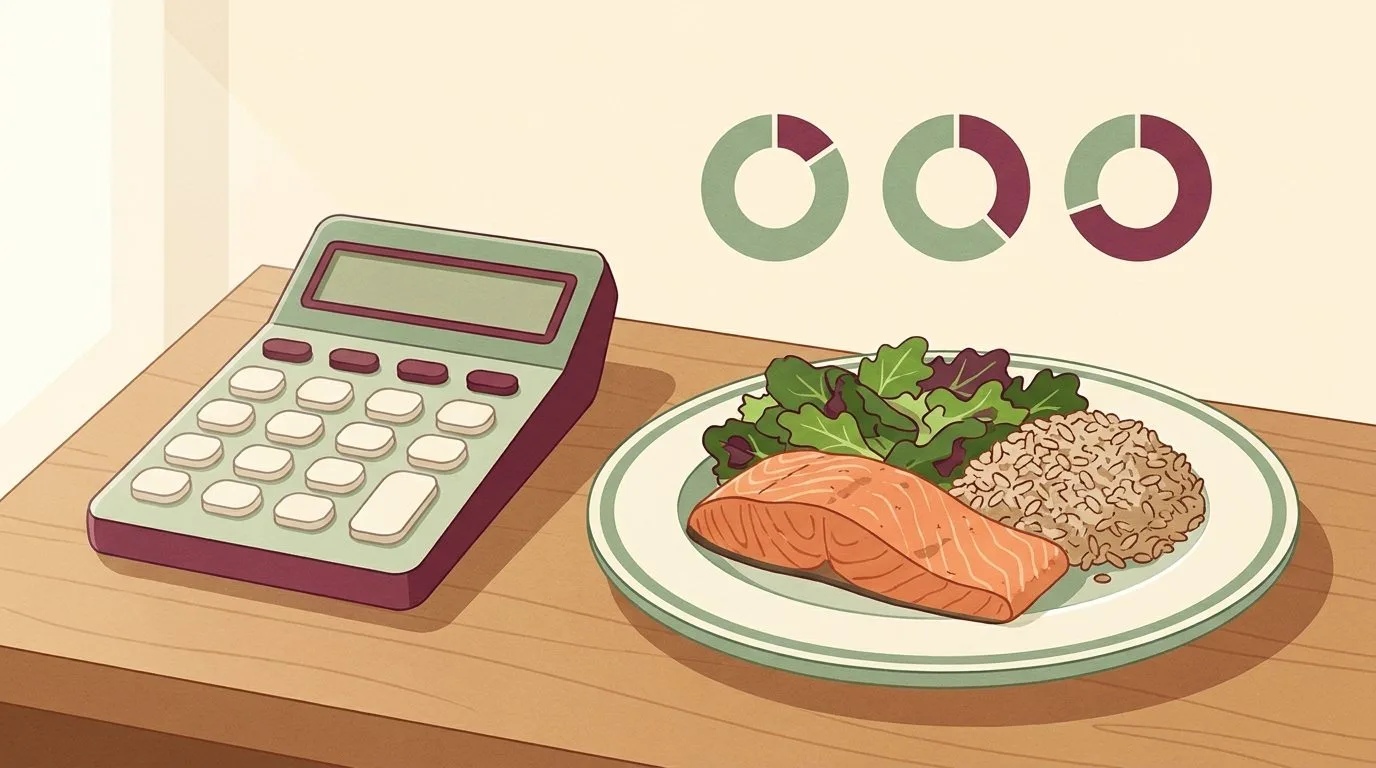
Short answer: Food labels are important because they let you compare foods on facts instead of marketing. A 2019 meta-analysis of 60 studies found that labeling cut people’s calorie intake by about 6.6% and fat intake by about 10.6%, and it pushed companies to cut sodium and trans fat. Simple front-of-package labels, like traffic lights and warning symbols, work better than numbers alone.
Most shoppers spend only a few seconds with each product. This guide covers what research shows about labels and healthier choices, how warning labels work around the world, where the FDA’s proposed front-of-package label stands, and five practical ways to use any label in under a minute.
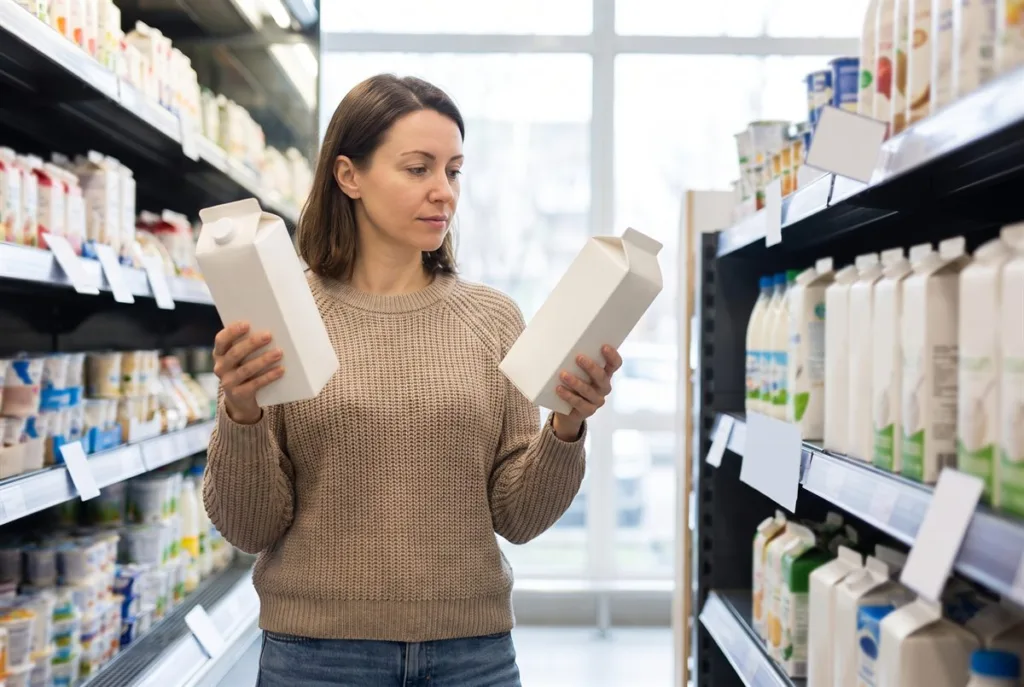
Why Are Food Labels Important?
Food labels matter for five main reasons:
- They let you compare products. Two loaves of bread or two yogurts can differ by several times in added sugar or sodium. The Nutrition Facts panel uses the same format on every package, so a side-by-side comparison takes seconds. (See how to read nutrition labels for a step-by-step guide.)
- They show what’s actually in the food. The ingredient list must name every ingredient in order by weight, so the first few ingredients tell you what the product is mostly made of.
- They protect people with allergies. US law requires labels to declare the nine major food allergens: milk, eggs, fish, shellfish, tree nuts, peanuts, wheat, soybeans and sesame.
- They help you manage health conditions. People limiting sodium for blood pressure, carbohydrates for diabetes or saturated fat for cholesterol rely on per-serving numbers and % Daily Value.
- They change what companies sell. When nutrients have to be disclosed, manufacturers reformulate. Labeling requirements are linked to lower sodium and much lower trans fat in packaged foods.
Do Food Labels Actually Help People Eat Healthier?
Yes, though the effect is moderate and depends on label design. It’s also hard to separate the label’s effect from the fact that health-conscious people read labels more. The strongest evidence comes from studies that changed the labels and measured what people bought.
| Study | What it tested | Main finding |
|---|---|---|
| Shangguan et al., Am J Prev Med 2019 (meta-analysis of 60 studies, 11 countries) | Effects of food labeling of all types on diet and industry | Calorie intake down 6.6%, total fat down 10.6%, vegetable intake up 13.5%; product sodium down 8.9% and artificial trans fat down 64.3% |
| Song et al., PLoS Med 2021 (network meta-analysis, 134 studies) | Traffic-light, Nutri-Score and warning labels compared | All three made healthier picks more likely; nutrient warnings were the strongest (odds ratio 3.61). Color-coded labels were better at steering people toward healthy foods, while warnings were better at steering them away from unhealthy ones. Most studies were lab-based, not real stores. |
| Thorndike et al., Am J Prev Med 2014 (Massachusetts General Hospital cafeteria, 24 months) | Green/yellow/red labels plus placing healthy items within easier reach | “Red” item sales fell from 24% to 20% and “green” rose from 41% to 46%. Red beverages fell from 26% to 17% of drink sales. The changes lasted two years. |
| Taillie et al., PLoS Med 2020 (2,383 households in Chile) | Chile’s 2016 warning labels, marketing limits and school sales ban | Purchases of “high-in” beverages fell 23.7% compared with pre-law trends. The study can’t separate the label’s effect from the other policies. |
The pattern across these studies: labels work best when they are simple, visible on the front of the package, and interpretive (they tell you whether an amount is high or low instead of only giving a number).
Types of Front-of-Package Labels
The Nutrition Facts panel is detailed but sits on the back or side of the package. Front-of-package labels summarize the key information where shoppers actually look.
Traffic-light (color-coded) labels
Green, amber and red show whether fat, saturated fat, sugar and salt are low, medium or high. The UK uses a voluntary version. Color-coded labels make it easy to find better options within a category.
Warning labels
A symbol, such as a black octagon reading “high in sugar,” appears only when a product exceeds a set limit. Chile made these mandatory in 2016 for foods high in sugars, sodium, saturated fat or calories, and several other Latin American countries followed. Warnings are most effective at discouraging unhealthy purchases.
Summary scores
Systems such as Nutri-Score give the whole product a single grade (A to E). They are simple, but a single grade can hide which nutrient is the problem.
Are Warning Labels on Food Required in the US?
Not yet. In January 2025 the FDA proposed requiring a front-of-package “Nutrition Info box” on most packaged foods. The comment period closed on July 15, 2025, and as of October 2026 the FDA has not published a final rule. Under the proposal:
- The box would rate saturated fat, sodium and added sugars as Low, Med or High per serving.
- Low means 5% Daily Value or less, Med 6% to 19%, and High 20% or more. These are the same cutoffs as the 5/20 rule below.
- Companies with $10 million or more in annual food sales would have 3 years after the rule takes effect to comply; smaller companies would have 4 years.
The US already requires calorie counts on menus at restaurant chains with 20 or more locations. For what labels must show today, see food labeling requirements, and for the 2016 Nutrition Facts redesign, see FDA nutrition label changes. FDA also updated the definition of the “healthy” claim in December 2024; you can check a food against it with our nutrient content claim checker.
5 Ways to Use Food Labels for Healthier Choices
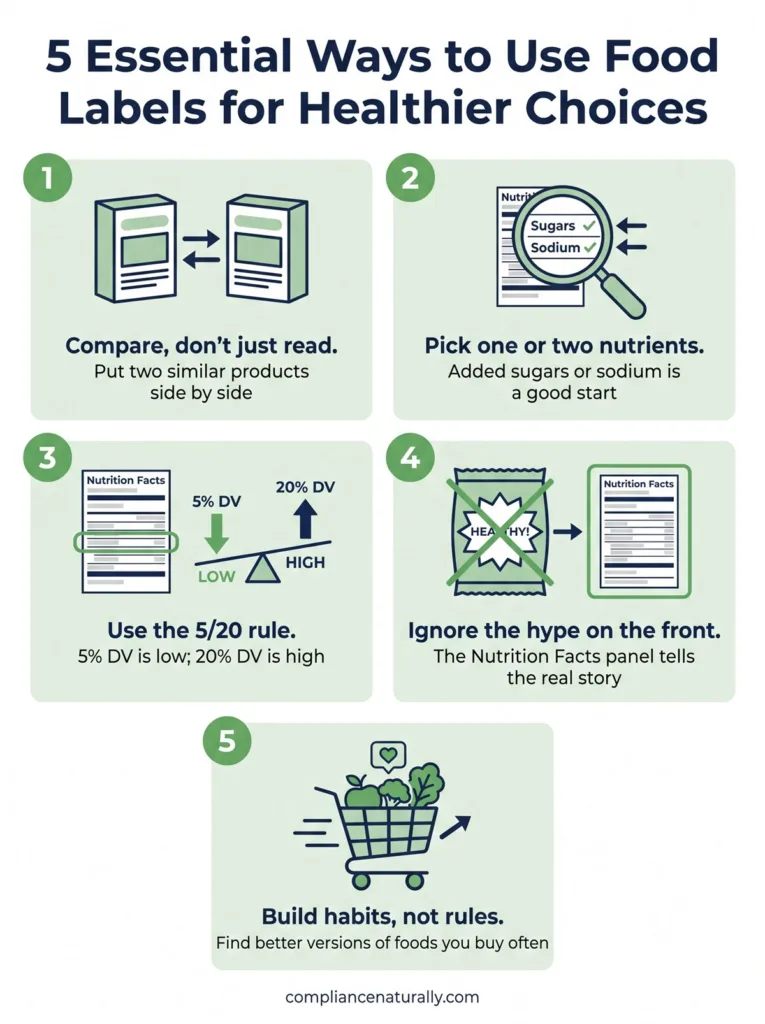
- Check the serving size first. Every number on the label is per serving. If you eat twice the serving, double everything.
- Use the 5/20 rule. 5% Daily Value or less is low; 20% or more is high. Aim low for added sugars, sodium and saturated fat, and high for fiber, vitamin D, calcium, iron and potassium.
- Compare two products side by side. Labels are most useful for choosing between similar foods, like two cereals or two pasta sauces.
- Read the first three ingredients. They make up most of the product. If sugar or refined flour comes first, the front-of-package claims matter less. (More on this in whole vs processed foods.)
- Ignore the hype on the front. Words like “natural,” “multigrain” and “made with real fruit” have no legal minimum. See misleading food labels for the most common tricks.
Limits of Food Labels
- Numbers can be off. FDA rules allow some variation between the label and the actual product. See how accurate nutrition labels are.
- Most whole foods have no label. Fresh produce, fish and meat counters often have no Nutrition Facts panel, though they are often the healthiest choices.
- Labels inform but don’t decide. Price, taste and habit drive most food choices. Labels work best alongside a plan, such as finding better versions of the 10 foods you buy most.
Frequently Asked Questions
Why is it important to read food labels?
Reading labels lets you compare similar products, spot added sugar, sodium and saturated fat, check for allergens, and see past marketing claims on the front of the package.
Do food labels actually help people eat better?
Yes, moderately. A meta-analysis of 60 studies found labeling reduced calorie intake by about 6.6% and fat intake by about 10.6%. Simple front-of-package labels have a stronger effect than numbers alone.
Which type of food label works best?
In a 2021 network meta-analysis, nutrient warning labels had the strongest effect on choosing healthier products. Color-coded labels were better at steering people toward healthy options, and warnings were better at discouraging unhealthy ones.
Will the US require front-of-package labels?
The FDA proposed a front-of-package “Nutrition Info box” in January 2025. It has not been finalized as of October 2026. If it is, large companies would have three years to comply.
What should I look at first on a food label?
The serving size, then added sugars, sodium and saturated fat. Use the 5/20 rule to judge whether each is low or high.
Sources and Further Reading
- Shangguan S, et al. A Meta-Analysis of Food Labeling Effects on Consumer Diet Behaviors and Industry Practices. Am J Prev Med. 2019;56(2):300-314.
- Song J, et al. Impact of color-coded and warning nutrition labelling schemes: A systematic review and network meta-analysis. PLoS Med. 2021;18(10):e1003765.
- Thorndike AN, et al. Traffic-light labels and choice architecture: promoting healthy food choices. Am J Prev Med. 2014;46(2):143-149.
- Taillie LS, et al. An evaluation of Chile’s Law of Food Labeling and Advertising on sugar-sweetened beverage purchases from 2015 to 2017. PLoS Med. 2020;17(2):e1003015.
- Food Labeling: Front-of-Package Nutrition Information (proposed rule). Federal Register, January 16, 2025.
- Front-of-Package Nutrition Labeling. US Food and Drug Administration.
- The Nutrition Facts Label. US Food and Drug Administration.